Gold Prospecting in Zambia: Natural Gold Find with Rover C4
From Zambian Soil: A Natural Gold Discovery
Some finds don't need a long backstory to make an impression — one look is enough: bone-dry, reddish-brown earth, sparse trees on the horizon, an overcast sky above open bushland. Right in the middle of it, an OKM Rover C4 at work.
A Find from the Zambian Bush
What matters is the result: natural, unrefined gold, recovered from Zambian soil — documented in the customer's own photos from the field. The images show open, rugged terrain typical of large parts of the country, with the OKM Rover C4 right at the center of the search.
The Scan in the Field
A classic metal detector isn't enough for natural gold prospecting: gold rarely sits as a single, well-defined object — more often it appears as a vein or fine deposit within the rock itself. That's exactly what the Rover C4's 3D ground scanner is built for: it scans the subsurface across an area, rather than waiting for one isolated signal.

On-Site Analysis
The Rover C4's strength shows not only during the scan itself, but right after it: the collected data is transferred to a laptop and evaluated on the spot with OKM's own analysis software — no lab, no waiting days for results. This on-site evaluation is exactly what our customer's photos capture.


Why Zambia Matters for Gold Prospectors
Zambia is best known internationally for its copper, but it also has significant gold reserves. Small-scale natural gold mining is growing in popularity across several regions of the country, driven by rising gold prices and renewed interest in its mineral wealth. For prospectors with their own equipment, this means a country where gold is found well beyond its famous copper belt.

The Technology Behind the Find
The Rover C4 is a 3D ground scanner and metal detector with a dedicated Mineral Scan mode, developed specifically to detect natural gold deposits and mineralized zones in the ground. The detector's 3D Ground Scan mode complements this: it displays magnetic anomalies in the ground, letting experienced users read position, depth, and size from that data. Two interchangeable sensors (Standard Probe and Super Sensor) let users balance target separation against range; according to user reports, depending on soil conditions and target size, this has enabled discoveries at depths of up to 25 meters. Engineered and built in Germany, in Altenburg.
Your Own Story Hasn't Been Written Yet
Not every find starts with a long journey or a dramatic turning point. Sometimes the right tool in the right place is all it takes. Discover how the Rover C4 can support you on the way to your own find.
Ready for Your Own Find?
Every search starts differently — but the right equipment makes all the difference. Discover the Rover C4 and find the right solution for your project.
Discover the Rover C4FAQ — Frequently Asked Questions About This Find
1. What is natural gold?
Gold as it occurs naturally in soil or rock, unprocessed — as opposed to refined gold used in jewelry or coins.
2. Where in Zambia is gold found?
The exact location of this particular find remains anonymous at the customer's request.
3. How is Mineral Scan mode different from classic metal detecting?
Instead of reacting only to a single metal signal, Mineral Scan mode maps the scanned area as a color-coded distribution of mineral concentration — making it possible to spot promising natural gold zones that a classic detector would miss.
4. How deep can the Rover C4 detect?
Depending on soil conditions and target size, user reports show discoveries at depths of up to 25 meters (82 ft).
5. How can I submit my own find?
Through our OKM Treasure Reward Program — simply submit your story and photos (anonymously, if you prefer) to be featured in our finds blog.
Get Rewarded for Your Treasure Finds
You have also made discoveries and detected amazing artifacts and would like to share them (anonymously)? We look forward to reading and publishing your success stories!

Brazil Gold Exploration: Discover Gold Veins with OKM Rover C4
Real gold discovery in Brazil: Natural gold veins found with the OKM Rover C4 ground scanner in a promising geological ...

How the Rover C4 Detects Gold Deposits at Historic Reed Mine
See how the OKM Rover C4 detects natural gold deposits at the historic Reed Gold Mine. Mark Harris, CEO of ...
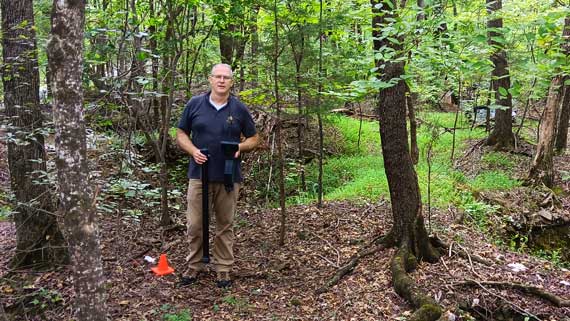
From America’s First Gold Mine to Modern Scanning: OKM at Reed Gold Mine
Mark Harris explores Reed Gold Mine with the OKM Rover C4, proving modern scans still reveal natural gold.